|
|
|
 |
 |
 |
 |
Preservation of Cultural Relics2007-3-6 18:45:00 From:
China has nearly 400,000 known unmovable cultural relics above ground and underground. So far, the State Council has listed 1,271 cultural sites under state protection and by 2015, the number may rise to 1,800. There are over 7,000 cultural sites under provincial-level protection and more than 60,000 under municipal and county-level protection. The national database for cultural relics information will be completed by 2015.
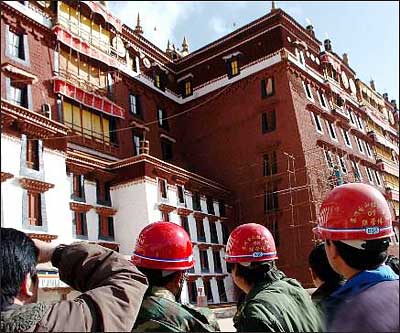
In the 1990s China made significant investment in protecting and rescuing cultural relics. Special subsidies by the Central Government for the protection of cultural relics reached some 700 million yuan for a thousand projects. As a result, a large number of cultural relics have been saved from destruction. In 2004, the government of Tibet Autonomous Region allocated 70 million yuan for the preservation and maintenance of the Potala Palace and the Norbuglinka and Sakya lamaseries. Major renovation of the 1,500-year-old Shaolin Temple in Henan Province began in February 2004. According to a program launched in 2005, 250 million yuan a year will go from state finance every year to the protection of key relics nationwide. So far the Chinese government has listed 101 famous historical and cultural cities under key national protection and 80-odd under provincial-level protection. From 2001 to 2005, 15 million yuan a year was allocated for their protection. The protection of these cities includes both the protection of the ancient buildings and historical sectors and the preservation of the layout, architectural styles and traditional cultures. A special law on the protection of historical and cultural cities is being drafted. As a large traditional agricultural country, China has a large distribution of ancient villages, a rare phenomenon in the world. The natural environment, as well as folk customs and handicrafts of these villages are well preserved. The cultural relics authority is planning a major ancient village protection project; by the end of 2005, the names of 44 towns and 36 villages under special protection had been released.
|
|
|
||||||||||||